Unlock the Full Potential of Your Commercial Solar Street Lights!
If you are importing solar lighting for infrastructure projects, your biggest financial risk isn’t the LED chip. It’s the energy storage.
When a battery fails prematurely, you aren’t just losing light—you are bleeding O&M budget on bucket trucks, labor, and replacements.
Here are the 3 reasons solar LED street lights batteries fail, and the exact engineering checklist we use to guarantee a 10-year lifespan for our clients.
A-Grade LiFePO4 Chemistry
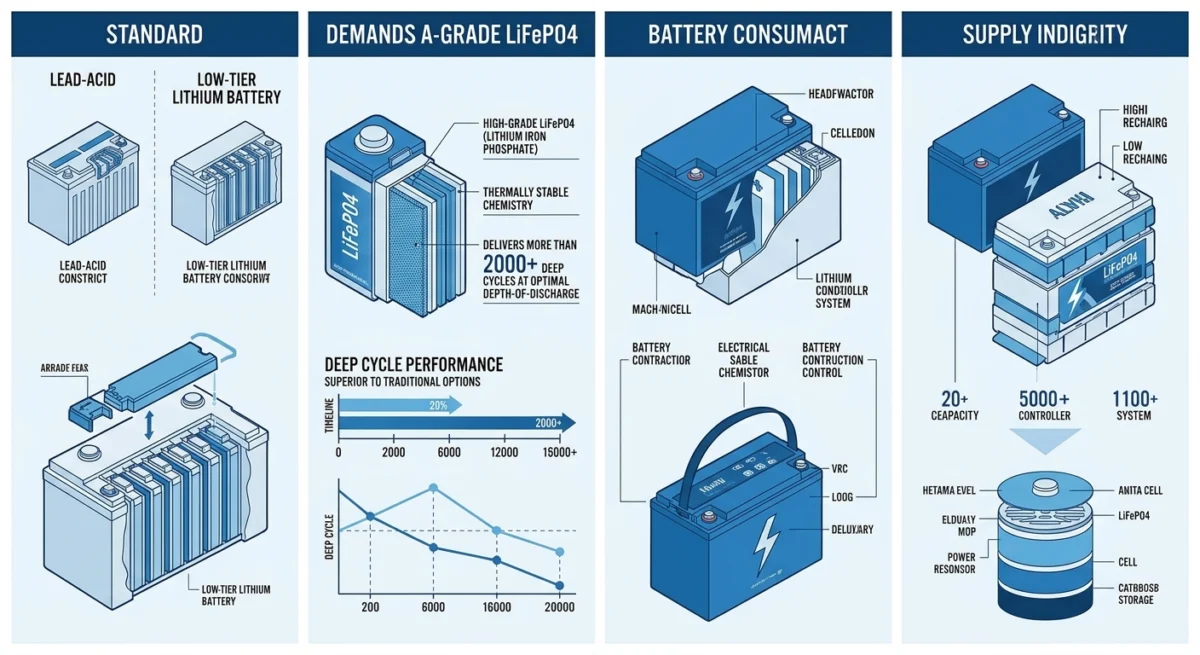
Do not accept standard lithium-ion. Lithium Iron Phosphate (LiFePO4) is thermally stable. High-grade LiFePO4 used for Lightide commercial solar led street lights is thermally stable and delivers more than 2000+ deep cycles at optimal depth-of-discharge.
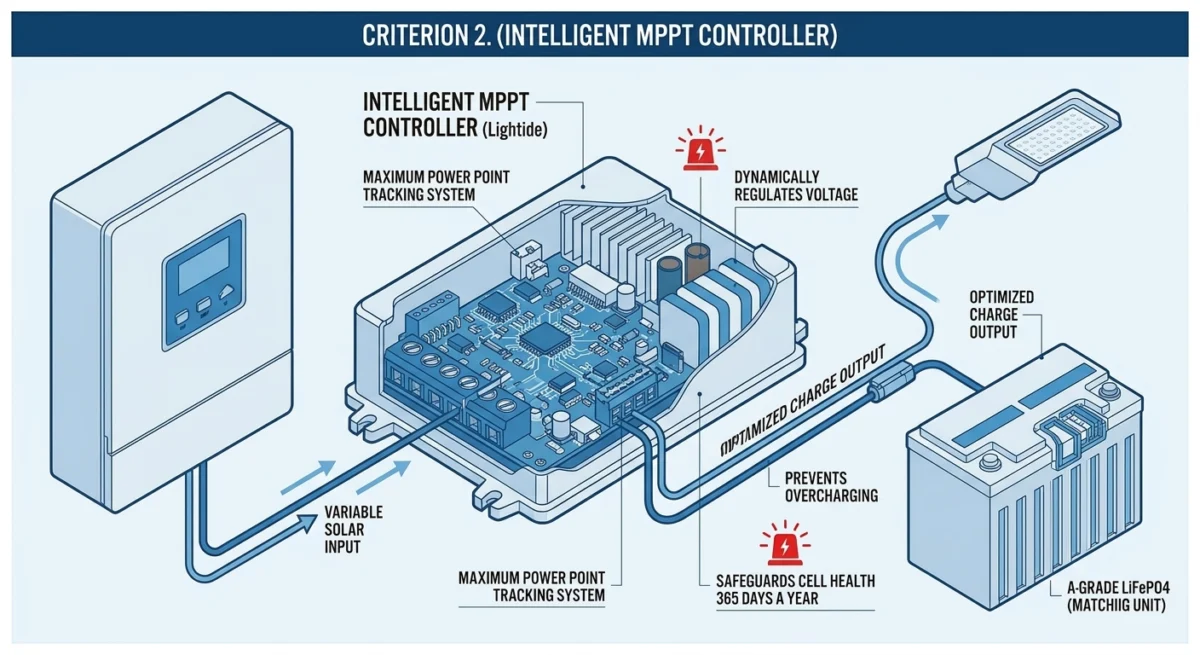
Intelligent MPPT Systems:
True Maximum Power Point Tracking (MPPT) dynamically regulates the charge/discharge curve, keeping the battery healthy even through heavy monsoon or winter seasons.
Lightide insists on an intelligent MPPT Controller to pair your battery to dynamically regulate voltage, prevent overcharging, and safeguard cell health 365 days a year.
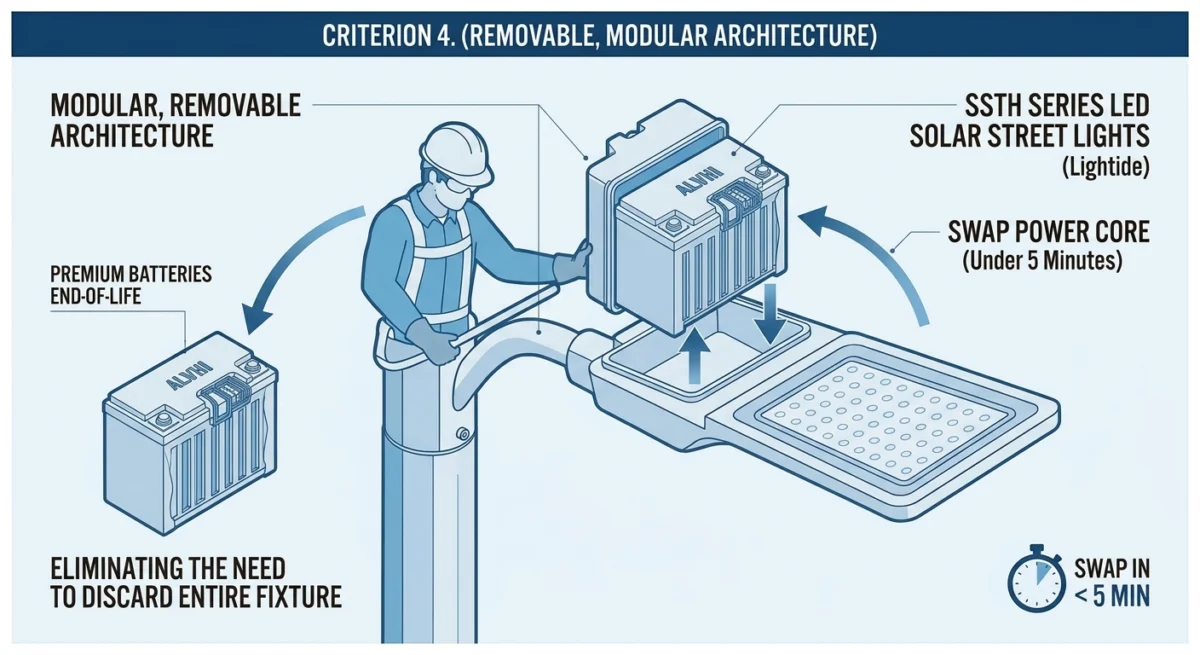
Removable, Modular Architecture:
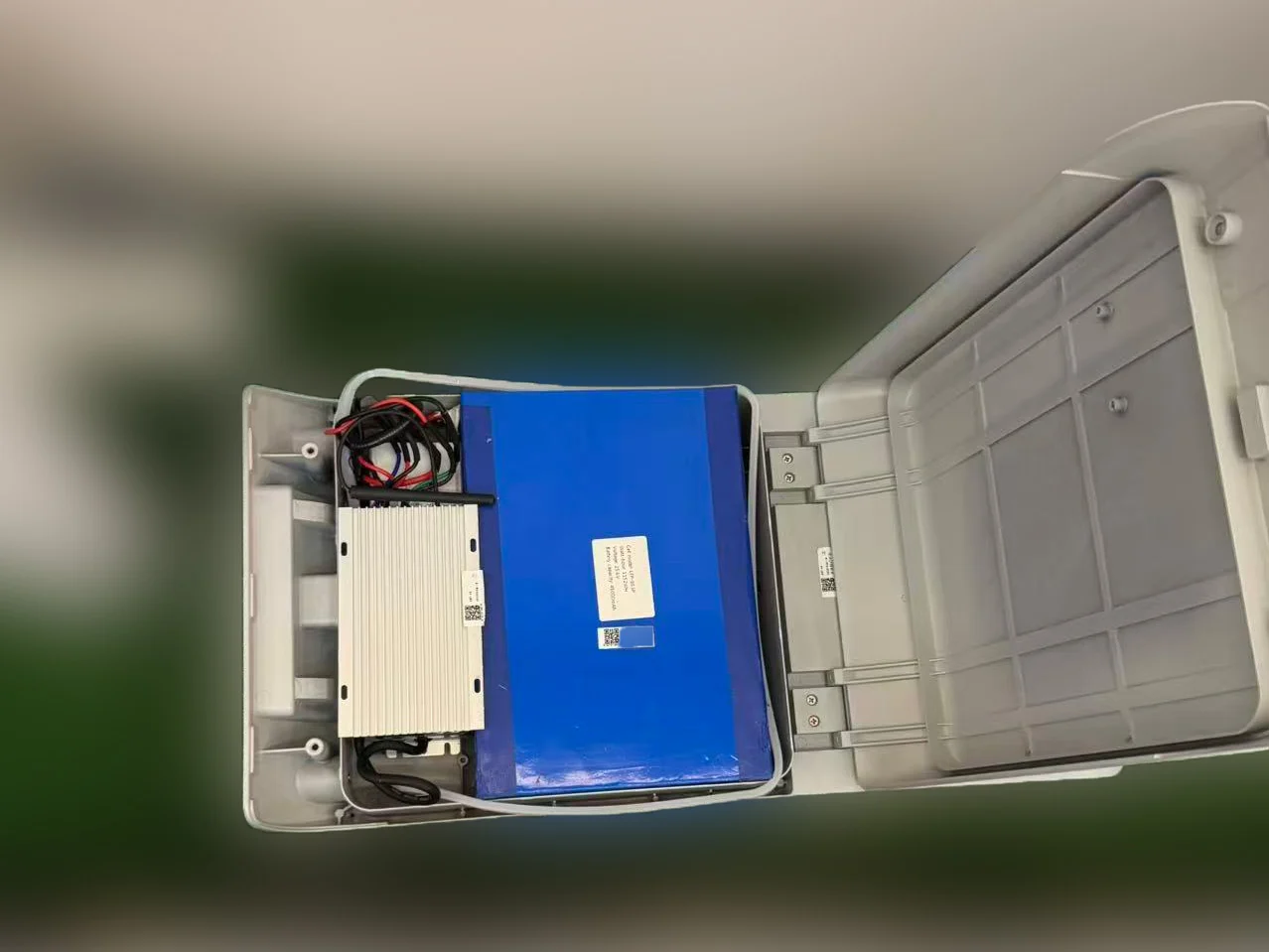
A dead battery shouldn’t mean a dead luminaire. Lightide SSTH series LED commercial solar street lights have installed a modular, removable battery, which allows field technicians to swap the power core at the pole top in under 5 minutes—eliminating the need to discard the entire fixture.
The Factory Inspection Checklist
Before you sign off on a Commercial Solar Street Lights shipment from China, demand these receipts:
BMS Validation:
Does the Battery Management System have active cut-offs for over-charge, over-discharge, and high-temperature?
Cell Certification:
Ask for the UN38.3 and MSDS reports specifically for the raw cells to prove they are Grade-A, not recycled.
Thermal Housing Test:
Ensure the physical housing provides thermal separation from the LED heat sink and is rated to at least IP65.